


Hazle Ceramics are well known internationally for the range of hand crafted (in England!) ceramics celebrating British High Street heritage ... shops shops and more shops, some famous and some not so famous but all show the typical British High Street shop which are sadly dwindling in number these days.
We have had this piece for a LONG time but we think it was acquired in the 1990's when we were in England. The shop doesn't appear to be of great significance but the architecture of the building is, being from the Victorian era.
Hazle Ceramics began in the 1990's, Hazle (Boyles) producing a range of shops fronts in a series called "A Nation Of Shopkeepers" This piece is from her "early days" as it is personally signed by Hazle, in later years she selected and employed a band of talented artists to assist her in production.
This piece has been slip moulded and hand decorated, by Hazle ... interested in learning about all the work she put into these creations?
Click on this photograph

HAZLE CERAMICS (ENGLAND) - Pulses Cafe
Made in England
Circa 1990's
Series: A Nation Of Shopkeepers
Hand slip moulded ceramic which has then been hand painted and glazed
Designed to be "hook hung" on the wall
DIMENSIONS:
210mm x 91mm wide
Hanging weight: 285g
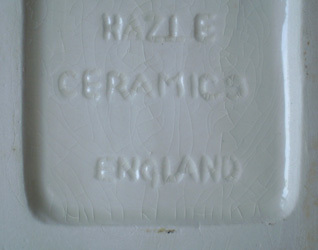
BACKSTAMP DETAILS:
Here is a photograph of the impressed backstamp
CONDITION:
USED
CLEAN
NO cracks at all
NO chips
NO discolouration to the White-Cream base china
NO damage to the decorative artwork
Hazle's signature is clearly visible at the lower right-hand side (NOT a fascimile!)
Crazing (cracks or failure of the topside glaze) was observed in some places, most notably on the rear around the impressed backstamp and if you look just past her signature, you can see some crazing around the base of the door.
NO bacteria or other nasties have gone to live in this cracked glazing, commonly seen as Brown stains or marks.
A nice example of Hazle's work from around 30 years ago, her early days.
To protect this piece from the ravages of the modern city environment (dirt, dust, pollution) I have now placed this piece in a sealed clear plastic packaging, awaiting the trip to a new collector of such things.


